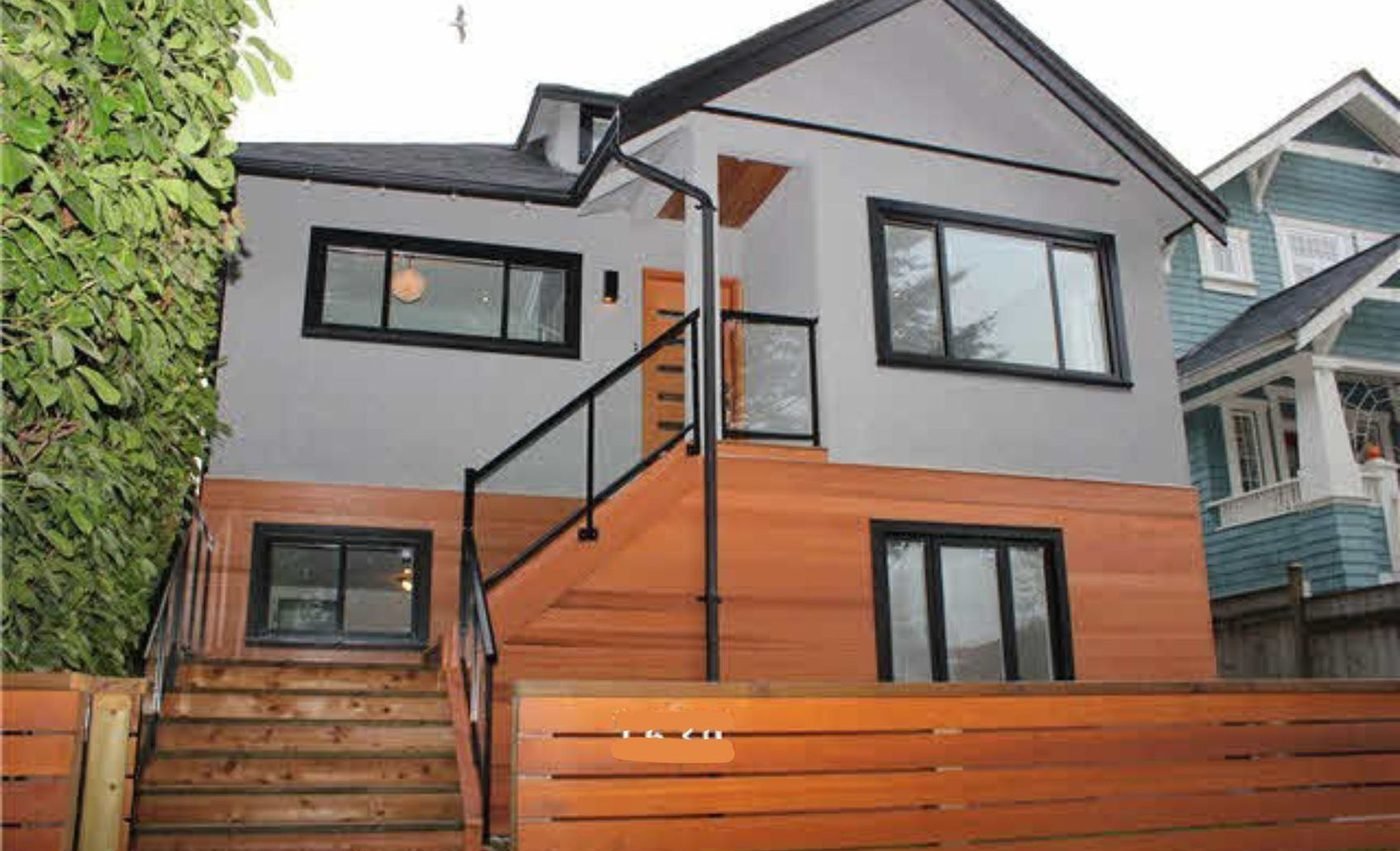
Kitsilano has some of the most beautiful older homes in Vancouver. Built mostly between 1910 and the 1930s, they come with fir floors, craftsman millwork, leaded glass, and proportions that just feel right. They're also a hundred years old, which means the bones are great and everything inside the walls is often a mess.
If you're thinking about renovating one, here's the honest version of what that actually looks like — what you're allowed to change, what you should fight to keep, what the city cares about, and what it will cost.
Why these homes are worth renovating
Kitsilano character homes — the Craftsman and Edwardian-era houses that line streets like Arbutus, Vine, and the avenues between Broadway and Cornwall — have something new construction can't replicate. The old-growth fir floors are denser than anything you'll find today. The casings and baseboards are thick and hand-finished. The leaded glass in the front windows is irreplaceable.
Beyond the aesthetics, these homes sit on large lots in one of Vancouver's most desirable neighbourhoods. That combination of character and location is rare. A well-done renovation doesn't just preserve what's there — it positions the property well for the long term.
What the City of Vancouver actually says
Vancouver has a formal framework for character homes — homes that are typically pre-1940, have retained most of their original exterior features, and contribute to the neighbourhood's historic feel. The city has used character retention as a planning tool to unlock things like laneway houses and secondary suites that might not otherwise be permitted on a given lot.
The specifics of what's available to you depend on your zoning, the age and condition of your home, and what the city's current policies say at the time you apply. We won't quote exact bylaw numbers here because those rules do change — check with the City of Vancouver's Development, Buildings and Licensing office before you plan around any specific density incentive. But the general principle is this: keeping the house standing and its character features intact tends to open more doors than demolishing and rebuilding.
If your home has been formally designated as a heritage property (a smaller subset of character homes), the rules are stricter and the process involves the city more directly. Most Kitsilano homes are character but not formally designated, which gives you more flexibility.
What to keep
On a character home renovation, the goal is to decide early what you're protecting so the rest of the project can flow around it. Generally speaking, these are the things worth fighting for:
- Fir floors. Old-growth Douglas fir is harder, tighter-grained, and more stable than modern lumber. If the floors are in reasonable condition, refinish them. They'll outlast any engineered product you could lay on top.
- Millwork and trim. The casings, baseboard profiles, picture rails, and built-in cabinetry are what make the house feel like itself. Removing them to modernize a room usually makes it feel cheaper, not better.
- Leaded and divided-light windows. Impossible to reproduce authentically. If they're drafty, adding interior storm inserts is a better move than replacing the units outright.
- The facade. Even if you're doing a full West Side renovation, the street-facing exterior — siding style, porch columns, roofline — is what the city and your neighbours care about most. Budget to restore, not replace.
- Ceiling heights and proportions. The rooms in these homes were designed to feel generous. Resist the urge to lower ceilings for mechanical reasons. A good mechanical engineer can usually find another way.
What to upgrade
Protecting the character of a home doesn't mean leaving the dangerous or inefficient parts alone. A proper character renovation addresses these things directly:
- Knob-and-tube wiring. Most Kits homes of this era still have at least some of it. It's not grounded, it can't be covered with insulation, and insurers increasingly won't write policies on homes with active knob-and-tube. A full re-wire is usually necessary.
- Galvanized plumbing. Corrodes from the inside out. If your water pressure is low and your pipes are original, they're probably partially blocked. Replacing with copper or PEX is a one-time fix.
- Insulation and air sealing. The original walls have almost none. Blown-in insulation and proper vapour barrier work can dramatically change the comfort and energy bills of the house without touching what's visible inside.
- Foundation. Many of these homes were built on rubble stone or unreinforced concrete foundations. A structural assessment is worth doing before you renovate — retrofitting seismic straps and addressing foundation issues is far cheaper before you open walls than after.
- Kitchens and bathrooms. These rooms were rarely original showpieces and usually benefit most from a full update. A structural open-concept kitchen reno — removing a wall between the kitchen and dining room — is one of the most common and highest-impact changes we do in Kitsilano homes.
What's usually off the table
A few things that come up in client conversations that are worth being honest about:
Dramatically changing the roofline or adding a full second storey is possible but triggers a full permit process and often a character review. It can be done, but it's a longer approval process and a bigger budget than most people expect going in.
Removing the front porch — especially if it's a covered, integral part of the facade — is something the city often pushes back on. The porch is usually the defining visual feature of a Craftsman home. We generally advise restoring it rather than removing it.
Replacing all the windows with vinyl units to save on energy is a trade-off most character home owners regret. The performance gain is real, but so is the visual loss. If budget is a constraint, prioritize the most drafty windows first and work through them over time.
What it actually costs
Character renovations are almost always more expensive than a comparable reno in a newer home. The hidden condition issues are real, the trades have to work more carefully, and the material matching takes more time. Here's a honest picture of the ranges we work in:
- One room or floor ($100K–$200K): Kitchen or bathrooms updated, services brought up to code, floors refinished. Structural work if needed.
- Full character renovation ($200K–$400K): Whole-home cosmetic and systems upgrade — new kitchen, baths, electrical, plumbing, insulation, windows — while protecting the character features throughout.
- Down-to-studs with foundation work ($400K+): When the structure needs serious attention or you're making significant additions. Rarer, but not unusual on the oldest homes in the neighbourhood.
These are real ranges, not low-ball numbers designed to get you in the door. The exact number depends on what you find behind the walls — and in a 1920s Kitsilano home, you always find something.
The honest version of the process
The first thing we do on a character home inquiry is walk the property and give you a read on what we're dealing with. Foundation condition, wiring era, plumbing type, insulation status, and what the exterior needs. That pre-design assessment shapes the scope before anyone draws a single line.
After that, design and permitting for a character home typically takes longer than a standard renovation — expect 6 to 12 weeks depending on scope and city review. Build timelines range from 3 months for a targeted kitchen or bath project to 6–9 months for a full-home renovation.
The homes that turn out the best are the ones where the owners came in clear-eyed about the budget and committed to protecting what makes the house worth renovating in the first place. That's the combination that works.
If you have a Kitsilano character home and you're trying to figure out what's realistic for your situation, the best first step is a conversation. We'll tell you what we're seeing and give you a straight answer on scope and budget.