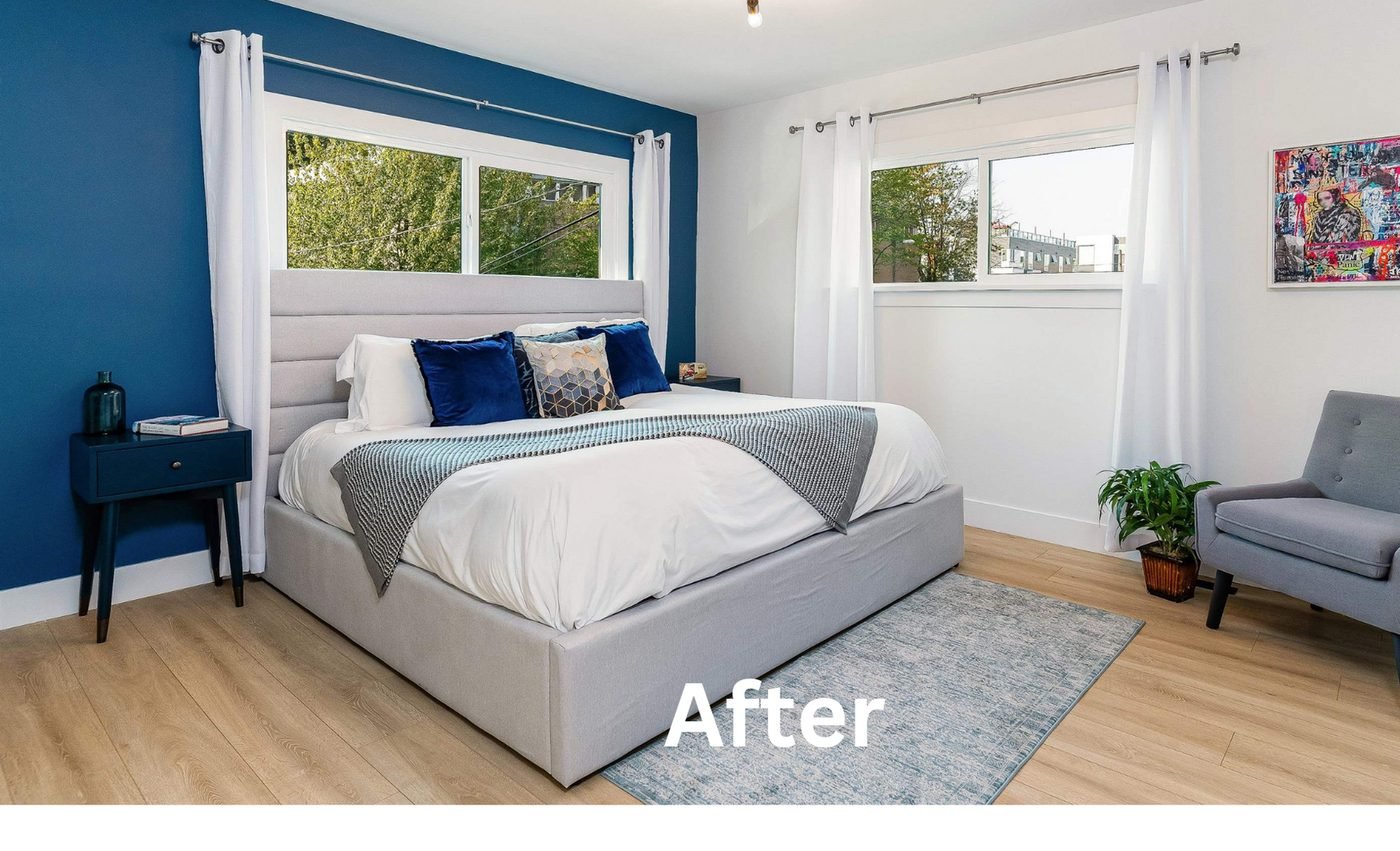
Open up your home.
Done safely, done right.
Removing a load-bearing wall is one of the highest-impact things you can do in a home — and one of the most technically demanding. Engineering, permits, temporary supports, beam sizing: Renohaus handles every piece, from first assessment to final finish.
The renovation that changes how your whole home feels.
A lot of Vancouver homes — especially the bungalows and two-storey specials built between the 1950s and 1980s — were designed with small, compartmentalized rooms. A kitchen tucked away from the dining room. A living room cut off from the back of the house. It made sense then. It doesn't fit the way people live now.
Opening those spaces up isn't just a demolition job. When a wall is load-bearing, it's doing real structural work — holding up the floor above, a beam, sometimes the roof. Pull it out without proper engineering and you create a problem that doesn't show up immediately. The ceiling sags. Doors stop closing right. In the worst cases, the structure settles.
Done properly, an open-concept conversion is one of the most permanent and valuable renovations you can do. It changes how light moves through the home, how the family uses the space, and what the place is worth.
What's typically involved
- Structural assessment to confirm load path and beam requirements
- Structural engineer drawings and stamped beam specification
- Permit application and coordination with the municipality's building department
- Temporary shoring — walls and ceiling supported before any demo starts
- LVL (laminated veneer lumber) or steel flitch beam installation
- New posts or point loads carried to the foundation or a beam below
- Electrical, plumbing or HVAC rerouted out of the wall if needed
- Framing, insulation, drywall, paint and flooring patch to blend the new opening
- Building inspection sign-off before wall is closed
Is that wall actually load-bearing?
This is the first question on every project, and it's the one people most often get wrong by guessing. A few useful starting points:
- Joist direction matters. A wall that runs perpendicular to the floor joists above is more likely to be supporting them. A wall that runs parallel often isn't — but not always.
- What's directly above it? If there's another wall, a beam, or the roof ridge sitting on the same line above, that's a load path. The wall below is probably structural.
- Centre walls in two-storey homes. The wall that splits the main floor down the middle is carrying half the upper floor. It's almost always load-bearing in a standard wood-frame home.
- Old homes get modified. A 1960s East Van special may have had walls added or removed over the decades. The framing doesn't always follow the original logic. You need someone who can open up the ceiling and actually look.
The right answer is to have a structural engineer assess it. In some cases we can get a good read by opening a small section of ceiling drywall first. Either way, we never assume — and you shouldn't either.
One more thing worth knowing: older Vancouver homes often have knob-and-tube wiring, cast-iron drain stacks, or original gas lines running inside walls you'd never expect. We find all of that before demo, not during.
From first look to finished space.
Assess What's Load-Bearing
We look at the framing, what's above and below, and often open a small section of ceiling or wall to confirm the load path. No guessing.
Structural Engineer & Permit
We engage a licensed structural engineer for beam calculations and stamped drawings, then pull the permit with the city before anything is touched.
Temporary Supports, Beam Install & Inspection
Shoring goes in first. Then demo, beam and post install, electrical/plumbing reroute if needed, and a building inspection before the wall closes up.
Finish, Drywall, Blend & Warranty
Framing, insulation, drywall, paint, ceiling patch and flooring blend. The goal is that you can't tell where the wall was. Written workmanship warranty on completion.
Structural renovation pricing in Greater Vancouver.
The range on structural work is wide because so much depends on span length, what's inside the wall, and what the floor above needs. These are realistic starting points based on projects across Vancouver and the surrounding municipalities.
- Single load-bearing wall removal with LVL beam ($12K–$25K) — shorter spans, standard ceiling height, no major mechanical in the wall. Includes engineering, permit, beam, posts and full finish.
- Steel beam or longer span, multiple supports ($25K–$45K) — spans over 12–14 feet, flush-beam configurations where the beam hides in the ceiling, or situations with significant point loads needing new posts to the foundation.
- Full open-concept main floor — wall plus kitchen reconfiguration ($60K–$120K+) — the most common full project: removing the wall, rerouting plumbing and electrical, new kitchen layout, island, cabinetry and finishes. It's a structural project and a kitchen project running together.
Almost every structural wall removal we do is paired with something else — a kitchen, a bathroom, or a whole main-floor refresh. It rarely makes sense to open the space and leave the kitchen as-is, so it's worth planning both together from the start.
Older Vancouver homes — particularly pre-1980 construction in East Van, Burnaby and Coquitlam — often have knob-and-tube wiring or cast-iron plumbing inside walls. When we find it, we flag it at the quote stage. It affects cost, but it's far better to know upfront than mid-demo.
Open-concept conversions across Greater Vancouver.
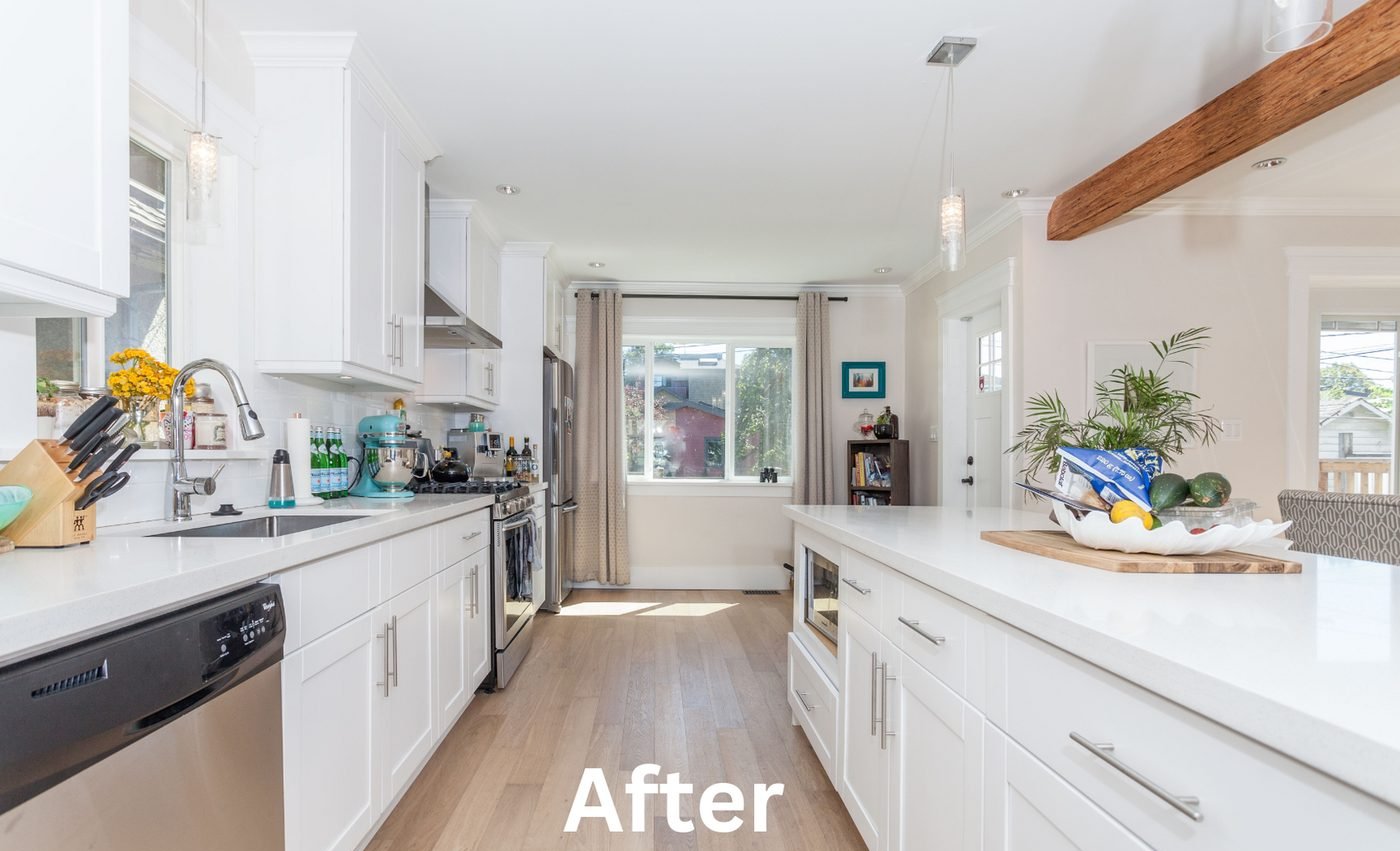
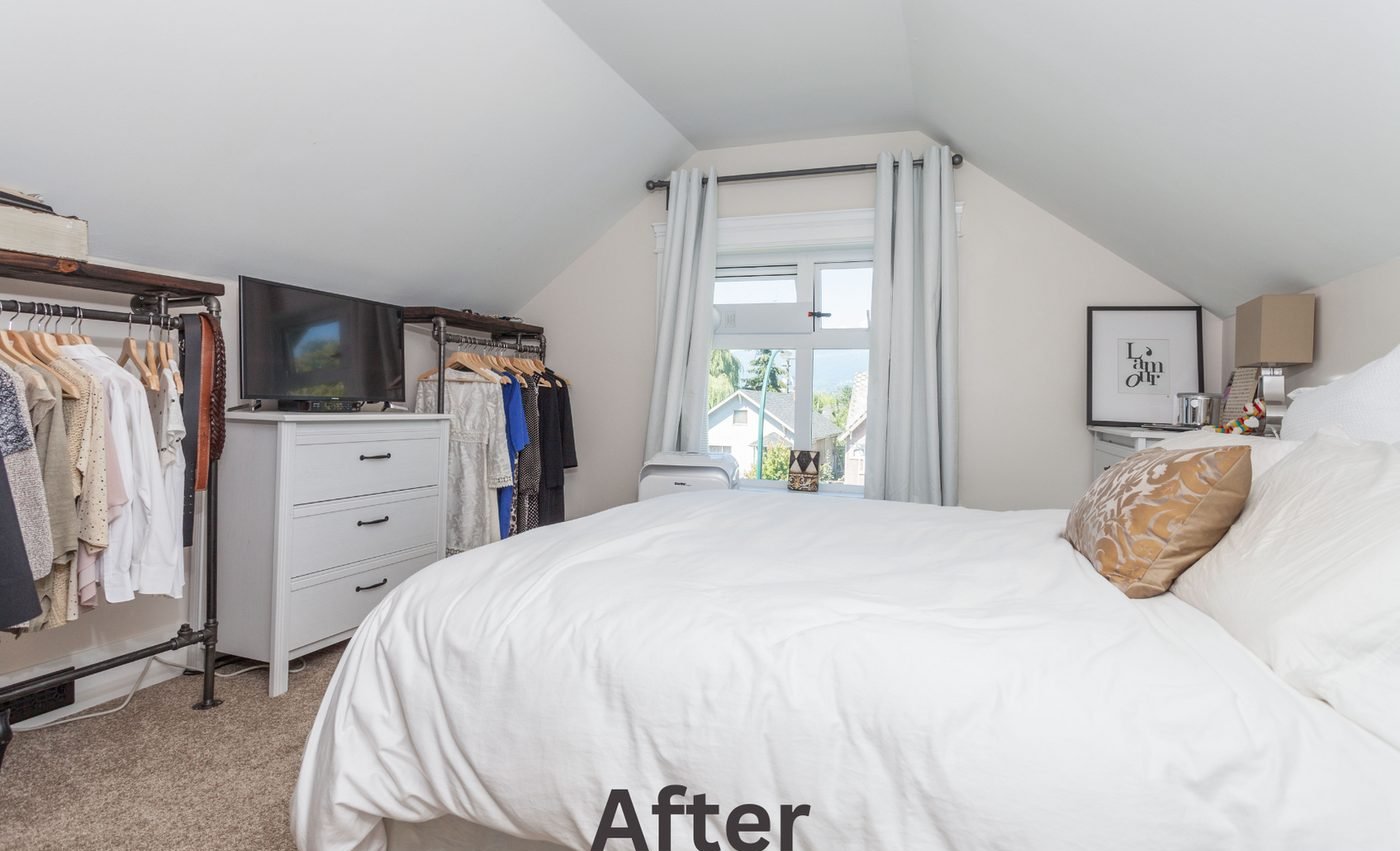
Drag to see the before and after.
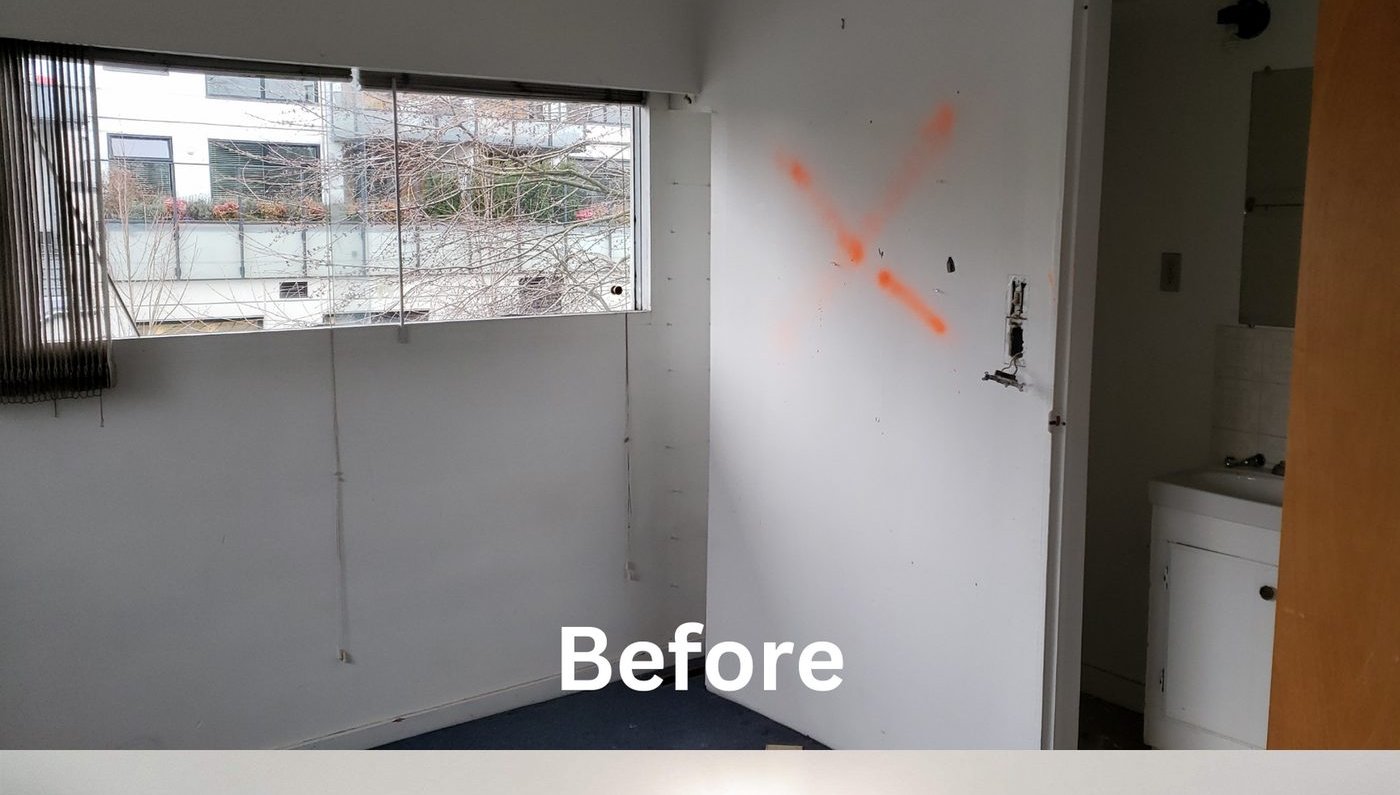
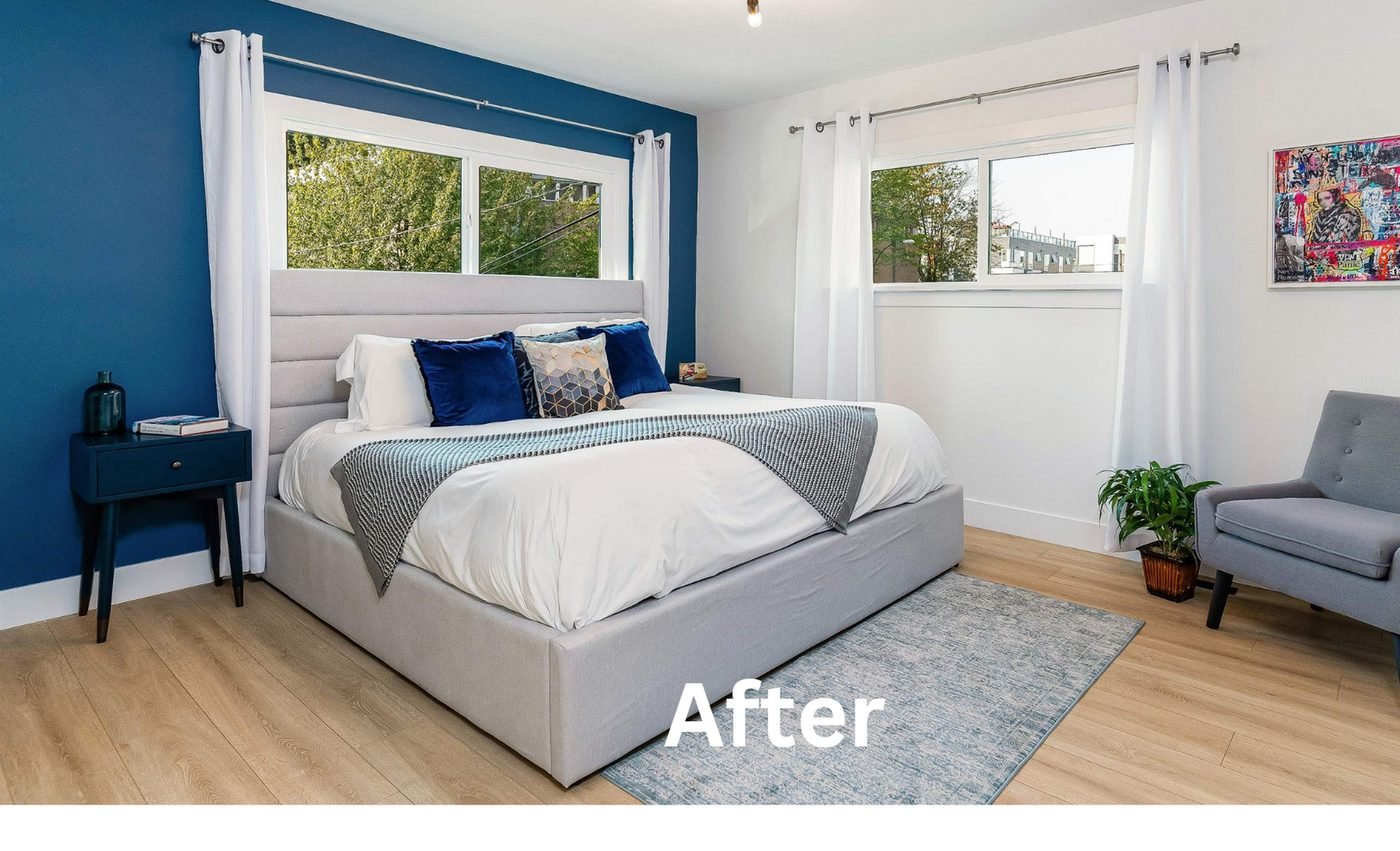
Load-bearing wall removal · Open-concept living · Vancouver
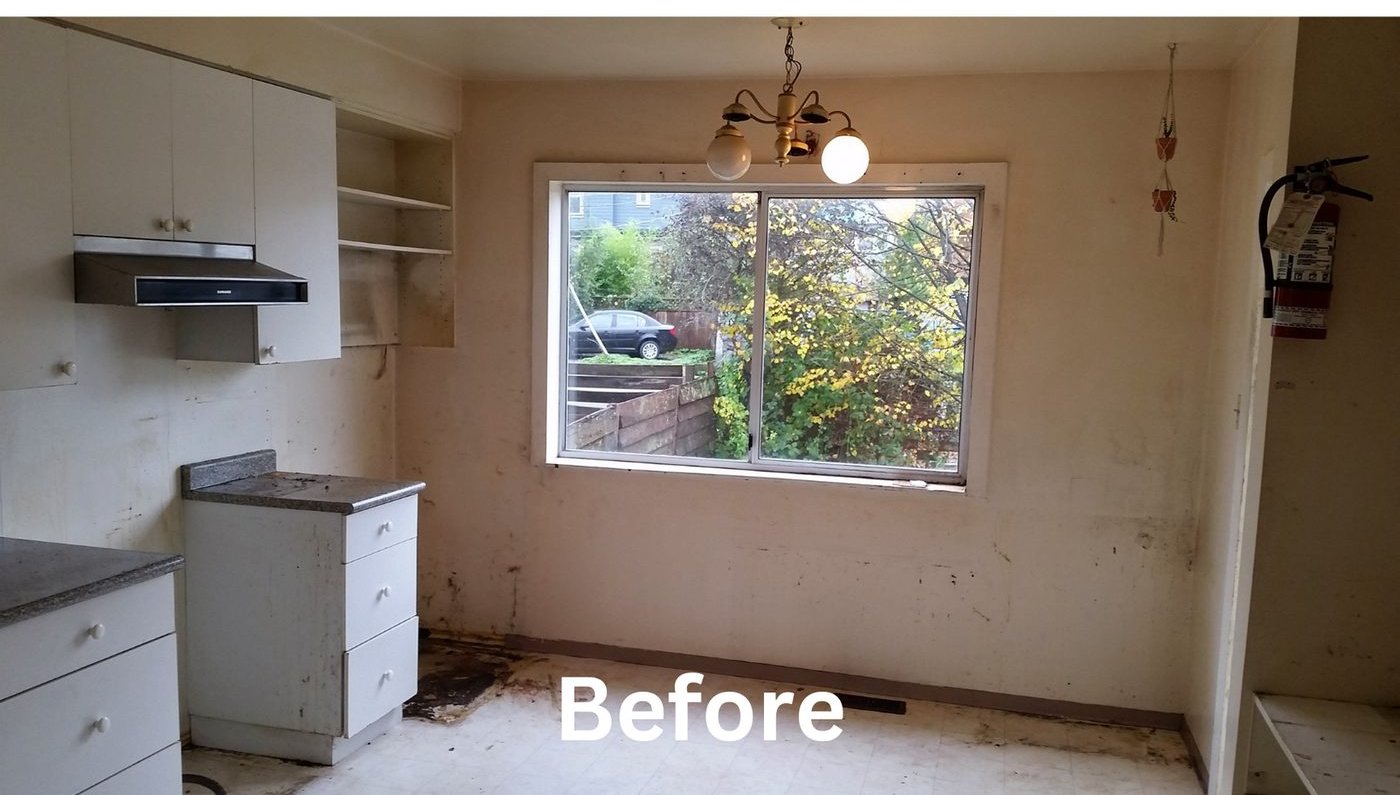
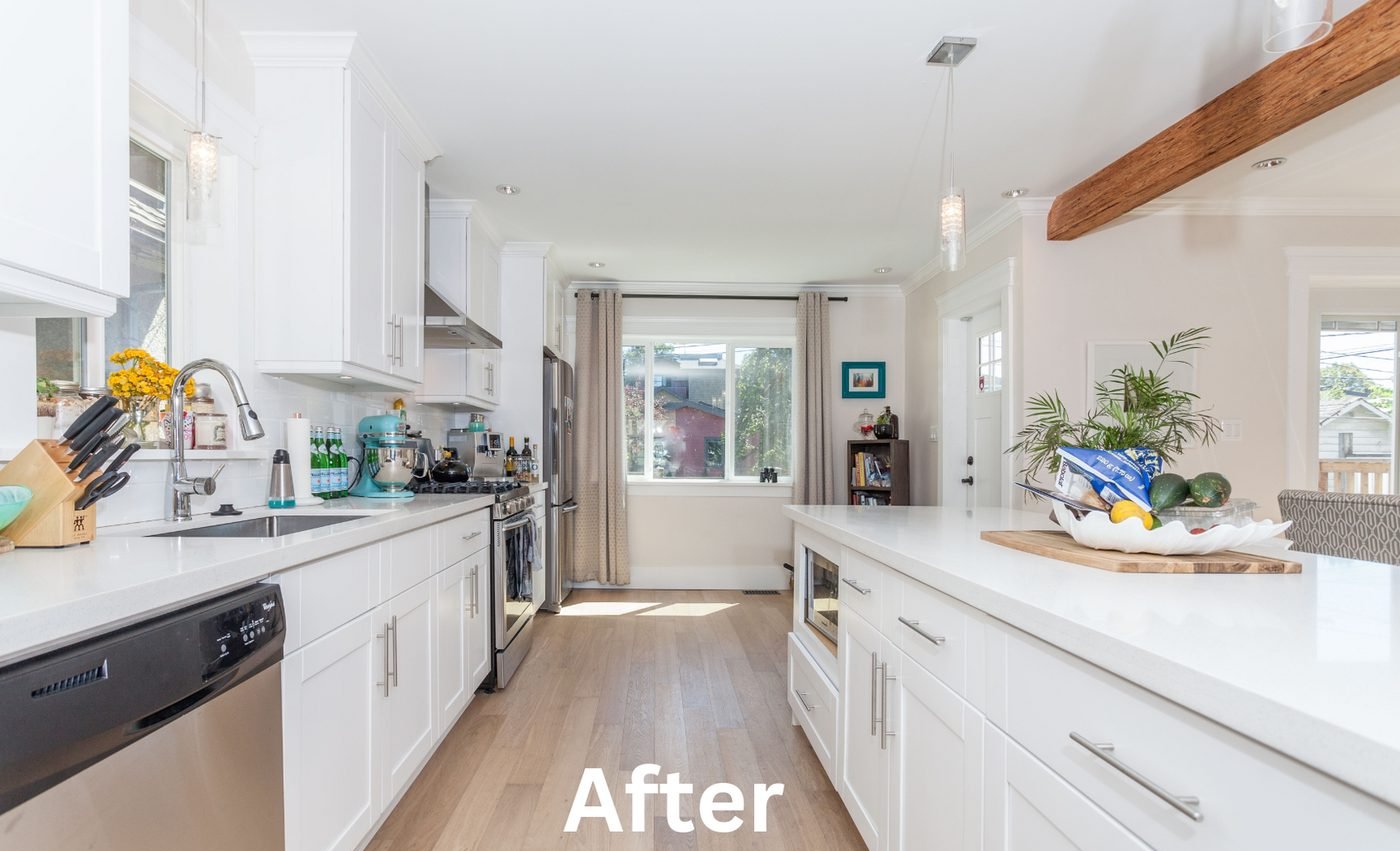
Wall removal and kitchen reconfiguration · Vancouver
Structural renovations across Greater Vancouver.
We do structural and open-concept work throughout Vancouver, North Vancouver, West Vancouver, Burnaby, Coquitlam, Richmond and Surrey. Every municipality handles permits a little differently — timelines and requirements vary between the City of Vancouver, the District of North Vancouver, the City of Burnaby and the others. We've worked with all of them and we manage the permit process regardless of which one applies to your address.
Older character homes in Kitsilano, East Van and Mount Pleasant get a lot of our structural work. They were built with small rooms and great bones — they open up beautifully when it's done right.
Questions, answered.
You often can't tell by looking. Walls running perpendicular to the floor joists, walls sitting directly below another wall or beam above, and centre walls in two-storey homes are all strong candidates. But Vancouver homes get modified, and the framing doesn't always follow the rules. The only reliable way to confirm is to open a section of ceiling and look — or have a structural engineer assess it. We never guess on your behalf.
Yes, always. A structural engineer calculates the correct beam size and load path — those calculations are what keep the floor above from sagging. The permit means a city inspector signs off on the beam and post installation before the wall gets closed. Skipping either one creates a hidden liability problem that can surface at home sale. We handle both as standard.
A single wall removal with an LVL beam typically runs $12,000–$25,000, depending on span, ceiling height and what's inside the wall. Longer spans needing a steel beam or multiple point loads usually run $25,000–$45,000. A full open-concept main floor paired with a kitchen reconfiguration typically starts around $60,000 and goes up from there. You get a fixed quote after we've assessed the scope — no open-ended billing.
The actual structural work — shoring, demo, beam install, inspection — takes 3–5 days on site. The lead time is longer: engineering drawings, permit approval (typically 2–6 weeks depending on the city), and material orders. Start to finish, plan on 6–10 weeks from the day you hire us to the day the space is open. Finishing trades (drywall, paint, flooring) add another 1–2 weeks.
Non-load-bearing partition walls can usually come out — it's mostly framing, drywall and electrical work. Load-bearing walls can come out too, as long as they're replaced by a proper beam and post system that carries the load to the foundation. The walls that need the most planning are ones with large mechanical runs in them — a main drain stack, gas line, or electrical panel. Those are all solvable, but they take more trades and more time.
Book a free
consultation.
Mon–Sat · 8am–6pm · Greater Vancouver
We'll call you back within 2 hours. No sales pressure.
We'll be in touch soon.
Thanks for reaching out — we typically respond within a few hours. Or call directly: (604) 359-8718